Patchouli Oil
1. The Plant – Pogostemon cablin
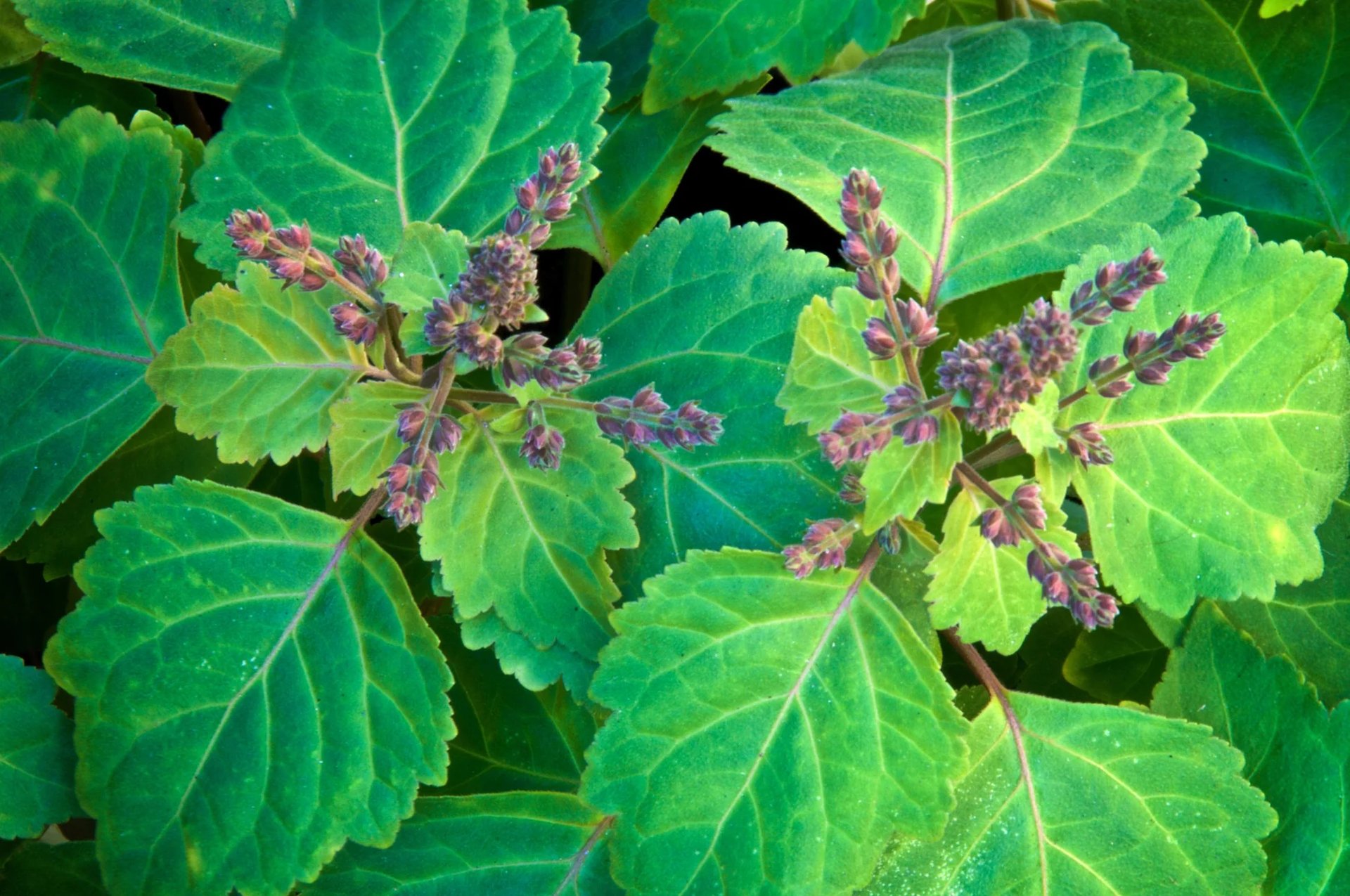
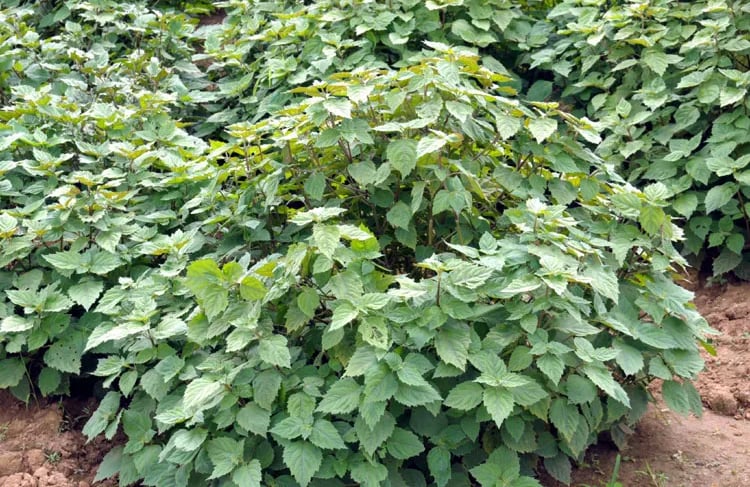
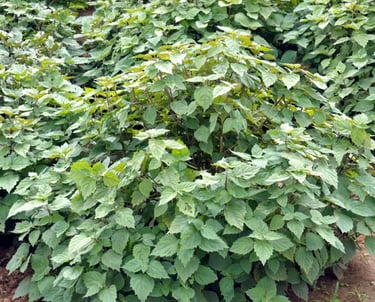
Patchouli is a tropical perennial herb in the mint family (Lamiaceae) native to Southeast Asia. It is cultivated mainly for its fragrant leaves and twigs, from which patchouli oil is extracted.
Key features include:
The plant produces bushy foliage with somewhat hairy leaves, which when crushed or rubbed emit a distinctive strong aroma.
The leaves and tender stems are harvested for oil production, while older woody stems are less ideal because they contain less volatile oil content.
It thrives in warm, humid climates, and Indonesia is a major producer of patchouli oil.
2. Why Patchouli Oil Matters
Patchouli oil is a valued essential oil with applications in perfumery, cosmetics, aromatherapy, and even traditional medicine.
Some of its uses include:
As a base or fixative in perfumes, giving a woody-earthy aroma.
In aromatherapy, reputed for its calming, grounding qualities.
In skincare and formulations due to bioactive compounds present in the oil.
Patchouli Oil: From Plant to Essential Oil
3. The Production Process: From Harvest to Oil
a) Harvesting & Preparation
Before distillation, the plant material must be properly prepared.
Leaves and preferably tender twigs are harvested; older stems yield less oil.
The harvested plant material is often dried or laid down (wilted) until moisture content drops to an optimum level (e.g., around 15-20 %) for better oil yield. Fresh leaves typically give lower yield.
Some sources mention light fermentation of the dried leaves before distillation to improve oil yield and quality.
b) Distillation: Extracting the Oil
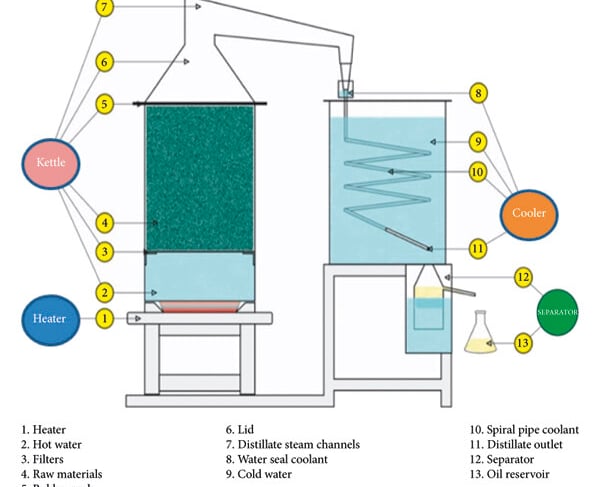
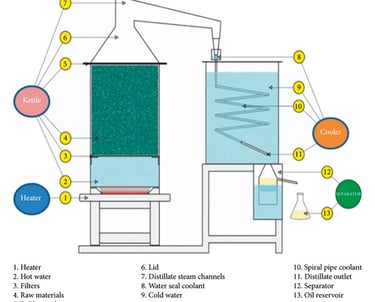
The typical method for extraction is steam distillation (or water-steam distillation).
Steps involved:
The prepared leaves (dried/partially dried) are placed into a distillation chamber.
Steam (or a mixture of steam and hot water) is passed through the plant material. The heat and steam rupture cell walls, releasing volatile aromatic compounds.
The vapour carrying essential oil and water then enters a condenser, becoming liquid (condensate).
Finally, the oil separates from the water (hydrosol) because of differences in density and immiscibility; the oil is collected and properly dried and stored.
Some data on yields: According to one source, distillation for 6–8 hours yields about 2.0-2.5% oil from air-dried herb.
4. Quality and Yield Considerations
The quality of patchouli oil is often judged by its content of patchoulol (patchouli alcohol) and other sesquiterpenes.
Drying the leaves before distillation gives better yield than using fresh leaves.
Improved extraction methods (e.g., microwave hydrodistillation or microwave air-hydrodistillation) have shown higher efficiency and lower energy consumption compared to conventional methods.
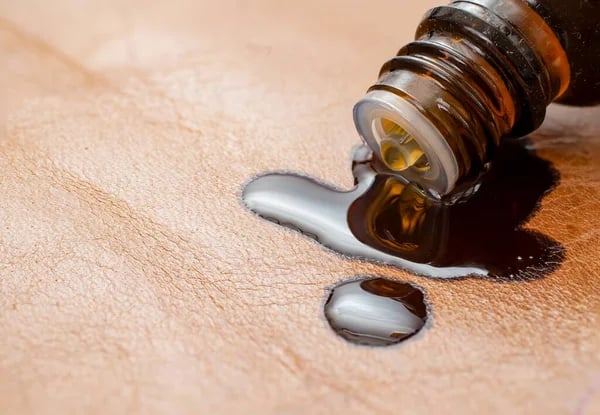
Storage is important: the oil must be stored in airtight, dark containers and kept away from water, air and sunlight to preserve quality.
5. Challenges and Opportunities
One challenge: Traditional distillation units in some regions may use less efficient equipment or lack process control, which can reduce yield and quality.
Opportunity: By implementing better drying methods, better plant material selection, and optimized distillation equipment, producers can increase yield and improve oil quality.
Market: Because patchouli oil has strong demand in perfumes, aromatherapy, and cosmetic industries, the potential for value addition is significant.
6. Conclusion
Patchouli oil is a high-value essential oil obtained from the leaves (and sometimes tender twigs) of the patchouli plant via steam distillation. With proper harvesting, drying, equipment and process control, producers can achieve efficient yields and high-quality oil. As global demand for natural aromatic oils continues to grow, patchouli offers a promising opportunity—provided the production methods maintain quality, sustainability, and profitability.